Sunday, May 4

Trash Talk


        At KISC, we do our best to separate as much of our waste as possible, in no less than 20 categories. Most of the recyclables are brought to Kandersteg’s recycling centre. From there they are taken to the different recycling plants across the canton and country.
       Whatever is not recyclable gets collected by a waste incineration plant and is burned to generate electric and heat energy.
 
       In Germany, there is a discussion going on about whether it’s better to recycle as much as possible or to burn as much as possible.
       Both recyclers and incinerators have their own economic interests to defend, of course, but there are also environmental arguments. Recycling saves precious materials, but takes a lot of transporting goods around. Burning produces energy, but also pollutes the air.
       At KISC we choose to separate waste as much as possible. Not only to save the materials, but also because handing in recyclables is for free, while burning our waste costs us money!
Dries (NL)
Grounds Manager
PS. Check out the film we made about recycling!

Wednesday, April 23

Secret Life of Bees Eco Take Home

As summer approaches, it is important to focus on different animals around our world, particularly the ones that need help. This Eco Blog will focus on bees, which while small, play a big part in our world. We will cover types of bees, why it is important to help them and what you can do at home!


 Types of Bees

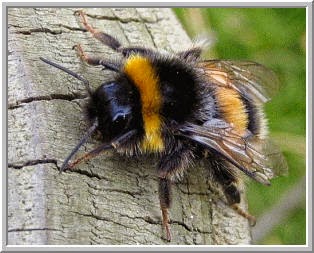
 The three most popular types of bees which are really important for the pollination of crops are the Bumblebee, the Honey Bee and the Mason Bees

Bumble Bees 

These bees are seen most often on flowers. They pollinate plants and gather nectar to make honey, but do not make nearly as much honey as honey bees. They are not particularly aggressive while buzzing from flower to flower and are much more interested in the next flower than they are in you. How-ever, they are very quick to defend their nest and will not hesitate to sting if they feel their nest is threatened. They tend to build fairly simple and disorganized nests in dry grass clip-pings, piles of dried leaves, porch furniture cushions, insulation, or other loose “fluffy” material. They can sting more than once because their stingers are smooth and do not get caught in the skin when they fly away. 

Honey Bees 


These are the bees that people most often associate with “bees.” They are also one of the most beneficial insects on the planet. Their role in pollination is vital to all sorts of fruit and vegetable crops. These bees live in very large, well organised colonies. The males are called drones and differ from females in that they are slightly larger, and have bigger eyes. A typical colony of this type of bee consists of 1 queen, 50,000 workers, 300 drones, 9000 larvae (needing food), 20’000 older larvae (needing to be kept warm) and 6000 eggs.

Mason Bees

They are solitary species and are non-aggressive, only stinging if provoked.
Providing an excellent pollination service, these bees are great to have in the garden. They like to nest in narrow tubes made by larva or woodpeckers in trees. They are called mason bees because of how they protect their eggs .The bees lay an egg in the tunnel, along with some pollen for the bee larvae to eat when it hatches. They then seal up the tube with mud to protect the larvae. Young bees stay dormant in the tubes over the winter then leave in the spring.

Bees worldwide are in danger. This is a problem because bees pollinate about 80% of the crops we eat or use. So if bees went extinct, it would effect the supply of chocolate, cotton (for clothes), coffee and tomatoes! Some of these crops are only pollinated by bees so they would become completely unavailable.

Bee numbers are decreasing all over the world. No one really knows for sure why this is, but, it is likely that some or all of these factors are to blame:

v  Varroa mite (a paracite) that lives on bees .

v  Loss of habitat, especially wild flowers.

v  Pesticides that farmers use on crops.

v  Air pollution that stops the bees smelling and therefore finding flowers.

So what can you do at home to help out bees? Bee boxes are the answer!

Bees boxes are for solitary bee species like Mason bees that don`t use hives. They will help young bees survive the winter. All you will need are bamboo sticks, a plant pot and some materials to hang or support it.

1. Cut the bamboo sticks into sections (measure on the pot how long they have to be)

2. Put the bamboo sticks into the flower pot.

3. Sand down the ends of the bamboo sick. If the flower pot has holes at the bottom use a cardboard piece to cover the holes.

Hang the bee boxes outside under an eave or on a fence post, south facing if possible (or north facing if you are in the southern hemisphere).

          It may be a small thing, but it is a large thing that everyone can do to help bring the bees back all over the world. Give it a try with your scouts, in your schools or just at home and let us know how it is getting on. Together, we can do our best to Be Eco.
Tad (US)
Eco Assistant

Friday, April 11

Snow Disappears, But The Campsite Stays White

It’s been very warm (and now rainy as well) in Kandersteg, with the snow is disappearing fast. But we’re getting something else white for it in return: Spring crocuses are popping up all over the place.

 
That means that spring has come to the campsite! We’ve stored all our snow shovels, and in a few weeks the Work Parties will help us to get the terrain ready for another busy summer.

This spring we have a Spanish, a Dutch, and an International Work Party; if you’re interested in joining a Work Party to work a few days for the Centre and to enjoy the mountains the rest of the week, send us an e-mail, and we’ll bring you into contact with the right people.

Dries (NL)
Grounds Manager

Sunday, April 6

The Tea Drinking Challenge

It is a matter of fact that Pinkies like to drink tea. Lots of tea! Especially black tea. Even more these days. Why? Because we are preparing for summer! Does that make sense to you? Well…

Tea is not just tea. Looking away from personal tastes, we all need to make sure that our tea comes from a sustainable supplier. We recently evaluated our tea-suppliers and found that in the centre we serve tea from at least 5 different brands at the same times. All of these have different eco-labels and different approaches to a sustainable and eco-friendly tea-industry. So we went to look behind the nice colours of the tea-bag and decided instead to support one brand of tea, which has good sustainable practices. The problem now comes: what do you do with all the rest of the tea from the previous suppliers? You drink it!

At this moment we have app. 3600 tea-bags of black tea of 5 different kinds. If you like milk in your black tea, 3600 cups of tea would require app. 54 L of milk. That is the same amount of milk that the staff team uses for breakfast, coffee, tea and drinking in 2 weeks! Also, there is all the fruit and herbal tea as well.
So if you are making your way by the centre in the next few months, please help us in the quest to become even more eco friendly before summer. If not, why not show your support of our efforts with a nice cup of tea?
If you have been inspired to look at the tea brands you yourself drink every day, then you might quickly get confused by all the different labels you see. So how do you find your way in this forest of eco-friendliness? 
There is a couple of different things to consider regarding the tea-industry: The worker’s conditions, de-forestation, and the quality of tea. Different eco-labels each focuses on one of these subjects. To find out which labels your brand of tea have (or what else they do to environment and society), visiting their web-site is the easiest solution. Underneath you will find a short unofficial guide to what the most common labels means.
Good luck finding your new favourite brand, and happy tea drinking!
Rainforest Alliance

Is only available on products which originate from rainforest areas. The suppliers are regularly check that the farms producing the products are taking precautions to conserve wildlife, waterways and forests. Also important is protecting the workers and their families and actively work for a long-term sustainability. Steps taken includes, reducing chemicals, increasing tree cover, protecting wildlife as well as local communities and indigenous people living in the areas.
Fairtrade

Fairtrade is one very well known brand that focuses on the rights of the workers and mall companies involved in the big industries of especially tea, coffee and chocolate. It is only available to producers in countries where the individual workers right is normally forgotten. Members can only be small producer organisations, that protects the right of any workers and reaches the quality goal. All companies trading Fairtrade must pay a certain minimum price and an investment bonus the company can use to further develop.   

FSC (Forest Stewardship Council)


An international organisation supporting responsible and sustainable forestry management. Works to find solutions between local inhabitants, environmental organisations and the timber industry to improve the local community and overall secure forests for the future. Products with the logo are from producers and areas which are environmentally responsible, socially beneficial and economically sustainable.

 
Mette (DK)
Catering Assistant 2014

Sunday, March 23

Clean Climbing


Spring season has started here in Kandersteg. It is time for many to put away skis and start thinking about hiking and climbing.
Climbing, be it rock, ice, or mountaineering, in particular is a activity most would not think to be Eco friendly. It has evolved to do so but still has a bit to go, which is why I wish to talk about it in light of recent events. The Nepalese government has recently ordered that each and every climber on Mount Everest “must bring back at least 8kg of garbage, apart from their own trash.“ This is a major step forward after decades of discarded oxygen bottles, packaging, clothes and in some extreme cases, bodies have littered the trail to the highest peak in the world. A failure for climbers to do this will result in major penalties from the Nepalese Government, which is not clear if that will be fines or revokes or cancelation of future climbing permits.
Many of us here at KISC are not only enthusiastic about being and playing in our serine mountain environment but also taking care our surroundings. This stems from not only a scouting principle of “leaving things better than you found it” but also from being a supportive member of the human race.
Changes have happened over the years to make climbing more Eco friendly and sustainable for climbers. In the early day of mountaineering, It was common in Europe, North America and Asia for climbers to use pitons. As pictured below, these are iron spikes or rods that one hammers into cracks and therefore secure to on their ascent.

                Pitons are damaging to the rock, by enlarging the cracks in the rock over time and are left to rust as they are not removable. While secure, climbers in the 1960s and 1970s realized there need to be a change.


                Pictured above are common modern methods of securement while climbing. On the left is a nut (also called a stopper or chalkstone). They are easily slipped into cracks and also (mostly) easy to remove after use. They were first used by British climbers in the 1950s and further propelled by Americans such as Yvon Chouinard in the 60s as part of clean climbing, or climbing in the least environmentally harmful way as possible.

                On the right is a cam, or Spring Loaded Camming Device. First invented in the 1930s by Russian climbers but later patented by climbers in the 1970s. They do a better job and are a lighter protection in even sized cracks than pitons ever could.  Additionally, they are removable and no damaging to the rock.

                These are all good steps in making climbing more clean but what are some of the ways KISC do to do our part? We first limit the number of guest per guide of a trip, not only to help out the guides on a climbing course, but to not put too much traffic on the rock. We do not use pitons but previously placed bolts and anchors, to set up our climbs. These are regularly check to be secure. Additionally, pre-placed bolts concentrate the impact of climbing to only a few climbs and not the whole rock. Lastly, we take good care of all our climbing equipment. Again, not only for safety reasons, but the less we have to replace and the more we can clean or repair can go a long way in making our climbing programs sustainable.
                Climbing, along with all other outdoor sports, be it skiing, rafting or mountain biking makes us better people. However it is important not the degrade the outdoors we love in exchange.  We invite all scouts to explore the hills around our little mountain chalet safely but with a little consideration to their impact along the way.
 
Tad (US)
Eco Assistant