Tuesday, November 29

Season changes.


Hi! I am Daniel from Taiwan, STS Autumn 2016. It's soon time to leave, so I'll take a moment to look back on my season. And it has been an amazing season. I can see the color of the nature and trees change from green to colorful orange. I remember our Staff Training when we learned a lot about Eco Policy at KISC, for example where our food comes from - which is mostly produced in Switzerland. Also, I got the opportunity to run an Eco Activity for a Maltese school group. I can be proud to share how the disposal at KISC works, and how we work towards helping our Earth. Right now, I'm telling other scouts how we work at KISC, to share with other Scouts around the world. When I go back to Taiwan, I will do my best to do more things for the Earth as a Pinkie, because one day Pinkie - always Pinkie. 


Beggining of the season. September.


Almost ending the season. November.


By Daniel (TW)
STS Autumn 2016

Thursday, August 11

What does transport do to the world?

Hi! My name is Tolly and I am a climbing guide at KISC. That means that I work in the Programme department and run the climbing activities as well as helping out in general, not only in the programme department, but in any department. My arrival at KISC was my first time being in Kandersteg, and I was blown away by the tremendous landscape and welcoming smiles, but also the sheer punctuality of transport services. On my days off I have taken advantage of these transport services, but in doing so, have been made aware of the effect of transport on the environment.

There is quite a significant difference in the availability of public transport between where I live in Ireland, and Kandersteg in Switzerland. Where I live in Ireland we have a bus service operating at odd hours and that is about it, but in Kandersteg there is both a regular bus service and a train station.

Take a look at this small table to get an idea of the grams of CO2 (a particularly bad pollutant) per mile for a few differently sized cars.


Size
Engine Size
Km per Litre
Grams of CO2 per km*
Small Car < 1.515.7 244
Medium Car 1.5 - 2 14 270
Large Car > 2 10.2 375

* calculated from Km/l and CO2 emissions of 3.15 kg per litre http://www.carbonindependent.org/sources_car.html


Fact: Trains are 3 times more energy efficient as cars, and 6 times more energy efficient than planes on a per-passenger-mile basis. 

Ireland’s CO2 emissions for transport last year (2015) was 13 million tonnes, and Switzerland’s was slightly higher at 16.4 million tonnes. However, Switzerland's population is nearly 8.1 million people, compared to Ireland's population of 4.6 million people. This means that the average Irish person produces 2.829 tonnes of CO2, over 40% more than the average Swiss person. That is quite a significant difference. One of the reasons for this is due to the increased access to and use of public transport in Switzerland. Another reason is how Switzerland generates it's electricity - see some of our other blog posts for more information on that!

So next time you are considering going somewhere, don’t just think of the cost, think of the environmental impact. By sharing cars or taking public transport, you can make a big difference.


Tolly (IE)

Thursday, July 28

Climate Change

Among the kisc staff, I'm in a rare position. I'm lucky enough to be in my second Snow and Ice season in a row. The Snow and Ice (or more commonly "Snice") guides are four members of summer staff who come to KISC specifically to guide groups on the Glacier at Fründenhütte. It's a fantastic job, and the Snice guides are always a slightly odd group, even when surrounded by Pinkies and Greenies. Most only have one Summer as Snice, but I was here last summer, and here I am again.
This is a job which puts me in the same mountains almost every day, meaning I've gotten to know them very well, and one of my favourite things is noticing things that have changed, or are in the process of changing. The mountains are moving, and "geological time" includes now.
Be it a simple broken branch or an enormous rockfall, there is always something different on the way up to the hut. The Summer sun is always pushing the snowline higher up the slopes, and as the freezing level rises things become looser. Our glacier (like most) is an extremely changeable environment, ever day sees avalanches and rockfalls from the side walls, and the ice itself bends and warps as the ice flows downhill. Crevasses open and close, chunks of ice the size of cars slowly become detached, and snowbridges disappear, leaving gaping holes where they were. The ice and the mountains are alive.
I also notice the difference in the ice between this year and last - there is less of it. Looking at photographs from previous years shows this even more clearly. Our little glacier above Kandersteg is disappearing, and it's heartbreaking.
We all know why this is; it is now almost universally accepted that our climate is warming, and that we are responsible. Our glacier is not alone, ice is melting all over the world. Every year Kandersteg and the rest of Europe sees less snow than in the past, and I find that upsetting. I can't place my finger on why, but I do. Climate change will affect us all in some way. Sometimes those effects are drastic and devastating. Sometimes, however, they're just a little bit sad.

By Duncan Butler (UK) - SNICE Guide 2015 & 2016


Friday, August 28

Hot Ice!


Hello world! My name is Arnor and I am a snow & ice helper here at KISC. That means that I am responsible for activities such as ice climbing and crevasse rescue on the amazing Fründen-glacier, just outside Kandersteg. I consider myself very lucky, as working on a glacier is both challenging and awesome and glaciers are among my favourite things in the world. However, there is a darker side to the story. The fact is that glaciers everywhere in the world are disappearing fast, due to climate change caused by humans.


How fast are the glaciers melting?

Fast enough for you to care, even if you’ve never even seen a glacier.
My home country, Iceland, is home to dozens of glaciers, including the largest glacier in Europe, Vatnajökull. Current estimates suggest that Vatnajökull will have completely disappeared in less than 200 years. Earlier this year, glaciologists in Iceland declared that one of the most famous glaciers in Iceland, simply named Ok, does not qualify as a glacier anymore.
Another example of this fast melting is the fact that in the year 1850 there were more than 150 glaciers in Glacier national park in Montana, USA, but now there are only 25 left.
Out of 140 glaciers in Switzerland, only 2 are not currently retreating. Even my work place, Fründen-glacier, retreats about 10 to 20 meters every year. At that rate, it will have completely disappeared in a few decades and the KISC snow & ice programme may be a thing of the past.

Why does it matter?

If all glaciers on earth melt, the sea level will rise an estimated 64 meters. Almost all of the great populated areas on earth are by the sea, so this will have a devastating effect  on places like New York, Beijing and all island nations.
Glaciers have a huge impact on weather patterns in high altitude and high latitude areas, and their disappearance will make the weather in these places hotter, dryer, and more extreme.
About 80% of all freshwater on earth is bound in glaciers. If this freshwater melts and flows into the sea, it can alter the salinity and temperature of the oceans. This will make the sea less habitable for many types of sea creatures, cause extinctions, and change ocean currents, such as the Gulf stream that gives northern Europe its gentle climate.

What to do?

Unfortunately, there does not seem to be much we can do to save the glaciers. Most climate scientists agree that the damage already caused by climate change is irreversible and it is probably too late to save the glaciers.
On the other hand, more and more people are becoming aware of this development, and fossil fuel usage (which causes climate change) is on decline.

Whether we will be able to save the glaciers or not, I have one advice for you: Use every chance you get to enjoy the wonders that glaciers have to offer. Go glacier-trekking, go ice climbing, experience the amazing feeling of strapping on a pair of crampons and wielding an ice axe. I promise you, it will be awesome. Enjoy the glaciers while they last, and have a safe and successful mountaineering.

By Arnór Bjarki Svarfdal (IS)
SNICE 2015

Friday, August 7

Eco fashion


No matter how much or how little we are interested in fashion, we all wear something.  But where do our clothes come from, what are they made of and what do we do with them when we’re finished with them?


Be Careful with Cotton!
Cotton farming uses a lot of water.  Since the 1960s badly planned cotton farming in Central Asia caused the Aral Sea in Kazakhstan to dry up. It used to be 68,000 km2 wide, the 4th largest salt water body in the world.  Now only 10% of the water is left.
Cotton farming also uses lots of chemicals.  In California alone, over 3 million kilos of chemicals are used in cotton farming.


Stranded boats on what used to be the Aral Sea.


Synthetic Fabrics
Many synthetic fabrics such as polyester and nylon are made from petroleum products and their manufacture is harmful to the environment. They often contain harmful chemicals and do not biodegrade when they are disposed of. A lot of outdoor clothing is made from synthetic fabrics.

Disposable Fashion
More and more people are buying very cheap clothes which are of poor quality.  When they wear out they just throw them away and buy new ones. This is a big environmental problem. On average every person in the UK dumps 30 kg of clothes and textiles a year!

The Good News
Many companies make clothes from recycled materials.  For example, fleeces can be made from recycled PET bottles.
Don’t forget to recycle your PET bottles while at KISC! Recycled polyester and nylon are available which use no crude oil and use less energy to produce than new polyester  and nylon.
 
Organic cotton uses no harmful chemicals. 
Responsible cotton farming saves water and protects ecosystems.

What can you do?
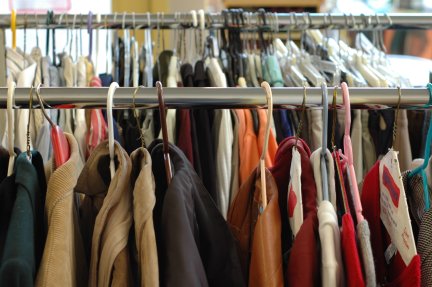
Buy secondhand clothes when you can
Swap your clothes with your friends.
Buy less clothes that are more durable and look after them.
Wash your clothes less often and at lower temperatures.
Use eco-friendly detergents like we do here at KISC.
Repair old clothes rather than throwing them away.
When you dispose of clothes, recycle them or give them to a secondhand shop.
 

Sources: “Well dressed?” Cambridge University (2006) ¦  www.patagonia.com
  
Remember, what you wear matters.  Think about your clothes before you buy them.  What are they made of, where did they come from and how long will they last?

By Annie Lewis (UK)
Eco Assistant

Tuesday, August 4

Eat-able Plants in Switzerland

Since ancient times, humans have had to find a way to feed themselves. They couldn't go to McDonald's or order a from Papa Johns'. Instead, they used other methods before they learned how to sow the seed's and make the plants grow. The only way to get their own food was by hunting or foraging . The Alps are made up of very different weather in areas very close together. This makes the environment very diverse, letting us find different kinds of plant's, some of them are edible or give fruits. We show you next some of the edible plants or alpine fruits that you can eat.

Alpine strawberry's (Jerry's favorites)
You can find them on the ground, little plants of about 15 cms long, each one give an average of 6 or 7 strawberries. These fruits are eaten by the marmot's because of their sweet taste, it's a treat for it.


Pine needles
This tree is very common in Switzerland, it can be found along the whole country. A difference between this tree and others is that it doesn't have leaves, instead it has needles. At the end of these needles you can find other ones that have a lighter green colour, which ones you can eat or boil for tea. The needles have a citrus flavor, which indicate that it contains some percentage of vitamin C.


Wood sorrel
Theses little plant's grow on the ground, and usually you can find lots of them all together, similar to the shamrocks but with some difference's, the wood sorrel have a citrus taste, you can eat them directly from the ground or you can put them inside boiling water to prepare tea. Just be careful not to mix them up with the Clover plant leaves, these ones have white stripes and can give you diarrhea.

By Jerry Venegas (MX)
Summer 2015

Thursday, July 16

Water water everywhere!

Electricity is integral to almost every aspect of modern life – from lighting our homes & schools, charging our mobiles and tablets, to keeping the food we keep in our fridges and freezers fresh. In this series of blogs, the Pinkie team at KISC will investigate the different ways in which we can generate electricity and power our world.

Water is one of the most important substances in our world. Here are some key facts to get you started:
• 71 % of the Earth’s surface is water
• Up to 75% of your body is water
• The average person in Switzerland consumes 162 litres of water every single day

Humans have used water not only for drinking and washing but also in a wide number of technologies; for example water mills have been in existence since 250BC! However it is only recently that we have started to use the incredible natural power of water to generate electricity.

There are numerous ways in which this can be done, with a common theme that they all use water falling under gravity to turn a turbine:
• Dams – storing water behind a barrier and using it's energy as it flows downhill
• Tidal – using the natural twice-daily tidal power of rivers and seas
• Wave – using the natural constant power of waves in the seas

Globally, electricity generated through one of the above mentioned methods accounts for just 16% of the total electricity generated, with the vast majority of the rest made up by fossil fuels (coal, oil, gas, nuclear etc). However, Switzerland is a noticeable exception to this, with their electricity being generated by:
• 56% hydro
• 39% nuclear
• Approx. 5% - All other forms

Why is hydro so popular you ask?
One of the main reasons is also one of the main things that makes KISC so special – the Alps! The natural rivers and streams that start from the highest mountain peaks must make their way to the ground eventually, and so not only do they supply water to us (the water from KISC’s Ueschinenhutte comes directly from a mountain stream) but we can also capture the energy stored in the water and generate the electricity required by us.

How does it work?
Imagine being at a swimming pool with one of those dunk buckets that slowly fills with water and, once full enough, tips over and dumps a whole load of water on your head. As you may be able to guess, the further off the ground the bucket is, the faster the water will be travelling when it hits you and the greater the energy contained within the water. It is a similar principle in hydro-electricity generation:
1. Big powerful rivers high up in the mountains flow down and pick up speed
2. This water is directed down pipes containing turbines
3. The water flowing past the turbines causes them to spin
4. This spinning motion is used to generate electricity

Kandersteg has its very own hydro-electricity plant, which is fed by the river Kander. For more info on this plant please visit our blog page. When you are at KISC, try and take a hike from the centre up to Gasterntal: on this hike you can see the normally gentle looking Kander crashing down the mountain with tremendous force, and really understand the incredible power that is stored within the water.
As a renewable energy source (i.e. it is not a finite resource which may run out), electricity generated by hydro-generation fits in with many of KISC’s and Scouting ethos – including our membership in the SCENES group (Read more about them here). Keep your eyes open for the next blog in which we’ll discuss other renewable energy sources and how they impact KISC.


By Andrew Pridding (UK)
Summer 2015

Sunday, September 21

Bright Ideas

          Recently we had an addition to the KISC energy. We already have hydro power provided from the local lake, Oeschinensee. In addition, we have a wood burning furnace for our hot water needs, which is powered by wood from our very own property. Now we are looking up, to the sun that is!


During the summer, we had the Greenpeace Solar Workshop from the folks at Greenpeace Switzerland and Solafrica. They also provided us with a treat before they left. Freshly installed are 26 panels on the top of Kanderlodge.

As explained in an earlier Eco Blog about PV cells and how they work, the maximum output for the panels are 2.6kWp with direct sunlight.

The solar panels themselves even have a history. They were formally on the roof of the Greenpeace Switzerland office in Zurich for 17 years. Because the lifetime expectancy for the solar panels are over 30 years, we hope to harness the energy from the solar panels for another 15 or so years.


            For the total use of power used by KISC, it only removes a small amount of our electrical usage. However, since the Kanderlodge is our most modern accommodation (completed in 2007), it should significantly reduce the power usage for years to come.

The new solar panels are a part of the many ways KISC is trying to set a good example as a SCENEs centre, but also an example of good outdoor stewardship.

Tad Sigman (US)

Eco Assistant

Thursday, September 11

PET Creations

With over 2000 guests at the high point of our summer season, our recycling center becomes very busy and this creates very full bins for many different recyclables. So I decided to do something creative out of the most common trash we have here at KISC, the PET bottle.

Candle Holder
 
The first really cool thing you can do with an empty PET bottle is a very nice table
decoration for your next BBQ. It's easy to do and it brings a holidays seaside feeling to your table.


You need :
  • empty PET bottles
  • candles
  • sand
Just fill the bottles with normal sand or, for a more colourful table, with coloured sand. Add a
nice candle and you have a beautiful decoration.

Bird Feeder

If you want to do something that lasts longer and makes you some new animal friends you should build a bird feeder.


You need :
  •  An empty PET bottle
  • 2 old pencils
  • Some Seeds (you can get them in a Pet Shop)
  • A knife
Start with making four holes for the pencils. Insert the pencils. The birds can sit on the pencils later. Add a feeding hole over every pencil. Now fill in the seeds and close the PET bottle. Add a wire or string to hang it in a tree. The last step is to hang your bird feeder out in your garden and see your new friends eating. Enjoy!

For more cool ideas for PET recycling like the Facebook page of  "Proud PET Recycler''.

My Best,

 
Jessica (CH)
Summer 2014

Tuesday, August 19

The River Is Wide

It has been a very busy few weeks here at KISC, but the good type of busy. The Eco Programme has introduced new programmes, reintroduced some old ones and completed solar workshops with other organizations. One of the most exciting events of the summer was the rising waters of the Kander, which brought us a little closer to nature than we could have hoped. 
 
  
The Kander river normal (top), low in the winter (middle) and high in the summer (bottom).
           
                Rivers all around the world, the Kander included, rise and fall over time. If a river overflows its banks and floods the natural surroundings and vegetation, it is called an ecological disturbance. These disturbances are key to the cycle of an ecosystem and can be found everywhere. In short, disturbances clear out an ecosystem when it has become overgrown. This creates a blank page for new organisms to move in and with time, grow into a new system of life. That is called ecological secession.
                Don’t be fooled, ecological disturbance and secession happen all the world over, from avalanches in the mountains taking out trees, to earthquakes and volcanoes in the pacific creating massive damages in their wake. Where ever you may be reading these words, there is a natural way for your local ecosystem to renew itself.

                We have had one of the wettest summers here in Kandersteg in recent memory, which has not only caused trouble with our programmes, but also with possible hazards when it comes to the river coming a little too close to home. The river has overflowed before, even causing the bakery in town to flood (including their flour storage rooms). Thanks to local construction in the last few years, the banks of the river are reinforced with boulders to prevent erosion of the banks and for further complications to arise. Here at the center, we have procedures in place for when the river could get too high. Thanks to our Maintenance Manager Janus (DK), with many Pinkies and Greenies, flooding was controlled by pumps from the chalet drains and sewage systems, while flood areas such as the parking lot and drains were closed off to prevent further problems.

It shows that, while nature can cause complications, we can and do as humans learn to live with our environment with proper preparation. In fact, the more we educate ourselves about our surroundings, like the rivers and the mountains that surround our little mountain chalet, the more comfortable and happy we can be.


Tad Sigman (US)
Eco Assistant

Saturday, June 28

Backwoods Workshop

            Summer is here at KISC! Guided activities start in only a few days and now is the time to talk about some of our new activities. Much like the environment itself, the Eco Programme is always evolving and we are happy to announce our new guided activity, the Backwoods Workshop.

Along with the other guided Eco activities, such as the Juicinator and Alternative Energy Workshop, the Backwoods Workshop aims to educate scouts about their surroundings with a hands on approach. It is by learning about our surroundings and knowing what we need and truly don’t need that we can teach ourselves about sustainability and reducing our impact on the land. After all, it was every single one of our ancestors that lived on this land. If they did not, you would not be here to read these words.

The workshop is broken into 4 sections: fire building, shelter building, water purification, and foraging and cooking.

With fire you will learn how to start fires a number of different ways. What is great about an international Scout center is that different cultures have different ways to start fires, so we can learn so much from other cultures about what is efficient.


Dries (NL) and Adri (BR) try their hand at fire building techniques.

                Shelters are fun to build, but not something exclusive to all Scouting programmes. In some countries, such as my own, wild shelters or bivvies’ are frowned upon, while scouts from Ireland build and camp in self made shelters all the time. This provides an excellent chance to practice your shelters with varied materials.


Classic A-Frame shelter

                Water is something that is very accessible in Switzerland but not elsewhere in the world. Learning how water is harmful and what you can do in order to prevent illness is important for not only survival but also for assisting developing countries. With a little knowledge, it doesn’t take much to stay nice and safe.


Check out this water filter made from a PETE bottle and natural materials, made by Tommy (US)

          Foraging is one of the best way to explore your surroundings. Through wild plants, you can find that rather than buying a salad at a store, all the vitamins and minerals can be found right outside your door. For example, the wood sorrel (pictured below) is easily identified and has a sour lemony taste when eaten. It provides a delightful change to ones wilderness salad, or just casual foraging. Be careful through, it is quite high in potassium and should not be consumed by people with kidney problems.


          If you're interested in exploring the woods around KISC more and learning of ways to not only survive, but thrive, then sign up for the Backwoods Workshop. With appreciation of  the Swiss woods, you can learn more about your surroundings in your country and do your part to be eco.
Tad Sigman (US)
Eco Assistant 

Thursday, June 5

Empire of the Sun

            Sun is shining in Kandersteg and not just from that big bright thing in the sky. We are rolling into summer with many bright ideas, from Alternative Energy Workshops to the upcoming Solar Workshop 21st July – 17th August. This is a great opportunity to talk about solar power and not just how it works but how KISC is active in its usage.
Solar Energy is on the rise as renewable energy. In March, it was reported that solar energy was just as cheap as conventional energy in both Italy and Germany, with France and Mexico close behind that. This is a big deal seeing that Germany is one of the largest users of solar panels in Europe. Increased incentives and lower costs encourages sun drenched countries to the south to use more.

But How Do Solar Panels Work?
            Solar panels that are commonly seen are called Photovoltaic Solar Panels (photo means light and voltaic means electricity in Greek). These simply convert sunlight into electrical energy. But how?
            This process is called the photoelectric effect, the idea that certain metals or materials produce an electrical current when exposed to light. This started out simple but has grown over the years into a more efficient and affordable use of general usage.
            A PV Solar Panel is much like a sandwich, a sandwich of Silicon that is. One of the two layers of silicon is less stable, so it has too many electrons and wants to get rid of them. The layer underneath has too few electrons and there needs to be a transition of balance between the two.

This is what the inside of a solar cell looks like, all protected in a glass covering. When photons (or sunlight) hits the top layer, the electrons built up in the top layer of Silicon (negatively charged) get excited and move to the bottom layer (positively charged), which creates an electrical current. Then there are some contacts on the end so the electricity can be transferred.
One problem is that there are two types of electricity. The electricity produced by the solar cell is DC (direct current) and most electricity in modern uses is AC (alternating current). A device called all a inverter is placed into the system so it can be converted from DC to AC in order be used properly. For more technical version of how this works, see a explanation here.

Here At KISC
            We use solar panels here at KISC. Our upper hut, Ueschinenhütte, is run off a solar panel for the little energy it needs. Solafrica and Greenpeace Youth Support Center visits from 21st July – 17th August for their Solar Workshop to teach our guests about solar panels and other uses of solar energy. Scout leaders can get training in solar energy.

Additionally Solar Expert is having a Solar Factory on the 14th - 20th of June where Solar Scout Gadgets are developed and built at KISC.

If your group is coming this summer around that time, contact the programme department at programme@kisc.ch to sign up for a free morning or afternoon eco activity. 

Combined with wind, hydro and thermal, solar power is one part of the solution in an ever green world.
Tad (US)
Eco Assistant


Monday, May 26

Have You Met Arnold?

Arnold is the squirrel that lives behind the Chalet. Last autumn the Work Parties gave his home a make-over. Here’s a picture of the new look.

             I’m not sure if he likes it, but his neighbors sure do. What we did is called coppicing: the Work Parties cut down a part of the trees and bushes at the base. In the next years, new stems will grow from the roots. After a few years we’ll do the same to the other trees in the picture.
With more light reaching the ground, more plant species will grow there, followed by more animals like butterflies and other insects to pollinate them.
The branches we cut will be put in a long pile. This attracts beetles and gives protection to mice, hedgehogs and little birds. (Watch out for Olave and Von Bon!)
The Pinkies in the offices also really like it, as we get more light inside now, and we don’t have to be afraid of trees falling onto the Chalet!

Dries (NL)
Grounds Manager

Saturday, May 10

Diary Of A River

After the big flood 2 years ago the banks of the Kander needed reinforcing. The part of the river in front of KISC was treated right after the disaster. Right now the government is finishing the job a bit downstream of the Centre.

This is a wonderful opportunity to see sedimentation (the deposit of clay, sand and gravel) in action, something I wrote about last December. Over the next months we’ll make photographs of this stretch of river to see where islands and banks form.


Dries (NL)
Grounds Manager

Sunday, May 4

Trash Talk


        At KISC, we do our best to separate as much of our waste as possible, in no less than 20 categories. Most of the recyclables are brought to Kandersteg’s recycling centre. From there they are taken to the different recycling plants across the canton and country.
       Whatever is not recyclable gets collected by a waste incineration plant and is burned to generate electric and heat energy.
 
       In Germany, there is a discussion going on about whether it’s better to recycle as much as possible or to burn as much as possible.
       Both recyclers and incinerators have their own economic interests to defend, of course, but there are also environmental arguments. Recycling saves precious materials, but takes a lot of transporting goods around. Burning produces energy, but also pollutes the air.
       At KISC we choose to separate waste as much as possible. Not only to save the materials, but also because handing in recyclables is for free, while burning our waste costs us money!
Dries (NL)
Grounds Manager
PS. Check out the film we made about recycling!